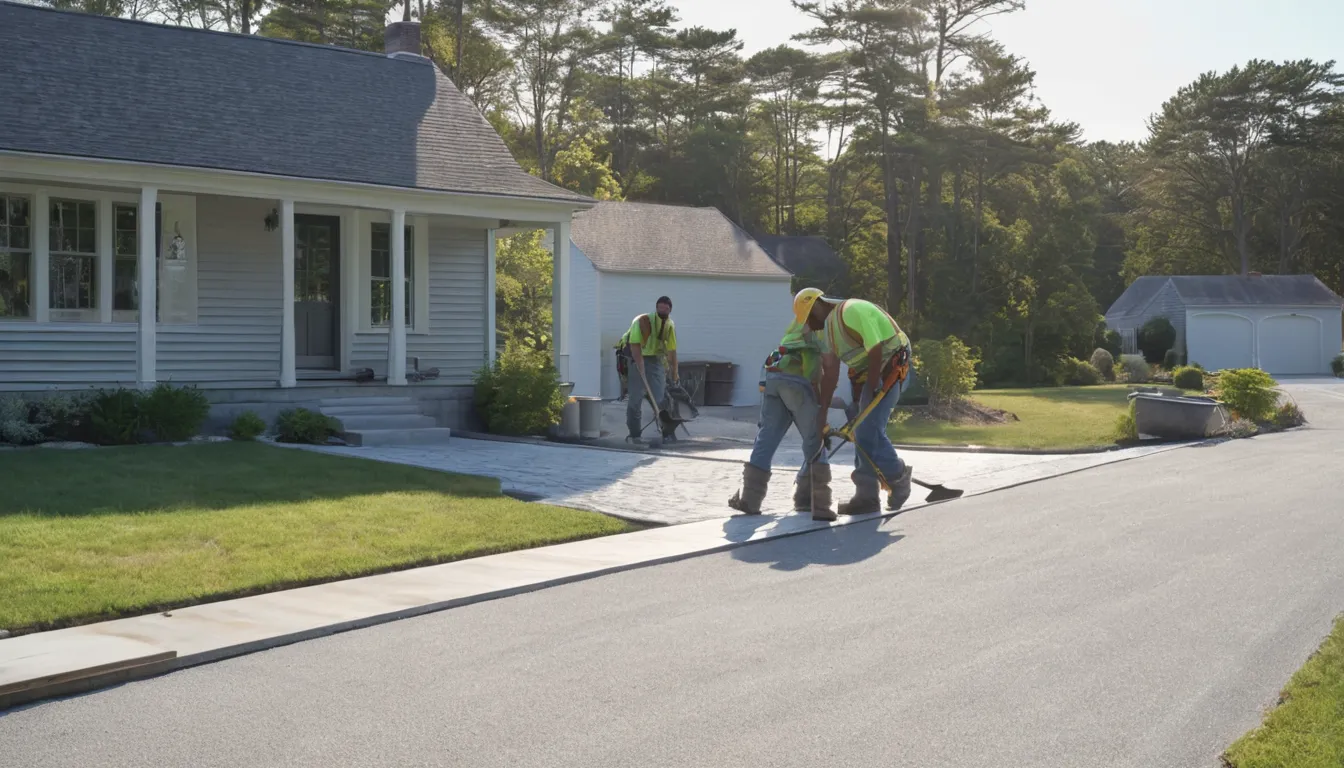
Concrete Driveways: Replace It Right
Request an estimate for your driveway
A driveway takes more abuse than any other slab on your property. Cars, plows, salt and freezing water all hit it every year. When it fails, the fix is rarely a quick patch. A new slab, poured on a solid base, is often the answer.
Healthypregnant Concrete is a referral service. The work is not done by Healthypregnant Concrete. Instead, we connect homeowners in Tinton Falls and the Tinton Falls area with independent local providers who pour and finish concrete. This page shows the warning signs, the scope of a typical job, and what to ask before you hire. Costs vary by job, so always get a written quote.
Is it time to replace your driveway?
Often, yes, if the slab is breaking apart. A patch holds only when the base under it is still sound. If the ground has shifted, the patch will fail too.
Signs you need a new driveway
Look for these:
- Cracks wide enough to fit a coin, or cracks that branch into pieces
- Sections sitting higher or lower than the next one
- A surface that flakes and shows bare stone
- Puddles that never drain, or water running toward the garage
- Crumbling edges and broken corners
One hairline crack is normal. A web of cracks is a warning.
Why winter does the damage
Water gets into small cracks. It freezes and expands. It thaws and does it again. Cold, snowy winters repeat this for months, and spring snowmelt adds more water. Coastal storms add even more. Salt makes the surface scale faster.
Slope matters too. A driveway that pitches toward the house sends water at your foundation. Foundation repair experts often trace wet basements back to bad concrete flatwork. Older homes with stone or block foundations feel this most. A new driveway should slope away from the house.
Repair or replace?
Concrete driveway repair makes sense for a few hairline cracks or one chipped corner. Replace when the damage keeps coming back, when slabs have sunk, or when the surface is failing across most of the drive. Ask a provider to look at the base before you decide.
What you can safely do yourself
Know your limits. Some jobs are fine for a handy homeowner:
- Clean the surface and clear weeds from the joints
- Fill hairline cracks with a concrete crack filler
- Seal a sound slab once it is clean and dry
- Take photos and measure the area for quotes
- Move cars and clear the path for the crew
What needs a pro
Everything else. Breaking out old concrete takes heavy tools. Grading and compacting the base takes a plate compactor and a good eye. Setting forms, placing steel and finishing the surface take practice.
Then there is the truck. Concrete starts setting the moment it is mixed. You get one shot. A first-timer who falls behind ends up with a rough slab that cannot be undone.
What a new driveway project includes
A typical job runs in this order:
- Remove the old slab and haul it away
- Regrade and compact the base
- Set forms and place reinforcement
- Pour, level and finish the concrete
- Cut control joints so cracks follow neat lines
- Cure the slab and clean up
Prep decides everything
Slab first, looks second. A thick, handsome slab on a soft base will still crack. Good providers spend more time on the ground than on the surface. Ask how deep the base will be and how it gets compacted.
Choosing size, thickness and finish
A one-car driveway is often 10 to 12 feet wide. A two-car drive runs closer to 20 to 24 feet. Four inches of thickness suits cars. Five or six inches suits heavy trucks or delivery vehicles.
For finish, a broom texture gives grip on ice and wet days. Ask about an air-entrained mix. It holds up better through freeze-thaw cycles. Skip a smooth trowel finish. It gets slick.
Permits and the street apron
The apron is the piece of driveway between the sidewalk or curb and the street. Many towns control it. You may need a permit, and the town may set width and slope rules. Some require their own inspection before the pour.
Experienced local providers usually know the process. Still, check with your town office. You are the one responsible for the permit.
Choosing a concrete provider
Get at least two written quotes. Compare the same things:
- Base depth and slab thickness
- Reinforcement type
- Mix specification and finish
- Joint layout and drainage plan
- Start date, timeline and what happens in bad weather
Ask for proof of insurance. Check any license your area requires. Be careful with anyone who knocks on your door with leftover concrete. A real driveway needs a plan.
Protecting your home's value
Your driveway is the first thing people see. Buyers notice cracks and sunken slabs. Inspectors flag drainage that points at the house. A clean, well-built slab supports curb appeal and avoids a repair credit at sale time.
Doing it once, and doing it right, costs less than patching every year.
After the pour
Keep people and pets off until the provider says it is safe. Keep cars off for about a week, or longer in cold weather. Concrete keeps gaining strength for weeks.
Seal the surface once it has cured, usually after about a month. Go easy on deicing salt the first winter. Use sand for traction and a plastic shovel to clear snow.
How Healthypregnant Concrete fits in
Healthypregnant Concrete does not do the work. We refer you to independent providers in our network. Request a callback to check provider availability in your area.
What's Included
Old Slab Removal
Providers break out the failed concrete, load it up and haul it off your property.
Base and Grading
Soil is shaped and compacted so water runs away from the house.
Forms and Steel
Forms set the shape. Wire or rebar adds strength before the pour.
Pour and Finish
Concrete is placed, leveled, textured and cut with joints, then left to cure.
Typical Concrete Driveway Cost Ranges in the U.S.
Prices swing with size, soil, access and local rules. These are ballpark figures only. Ask each provider for a written quote that lists every line.
| Item | Typical range | Notes |
|---|---|---|
| New slab, per sq ft | $6 – $12 | Depends on thickness, finish and region |
| One-car driveway | $2,000 – $4,500 | Roughly 12 by 20 feet |
| Two-car driveway | $4,500 – $9,000 | Roughly 20 by 24 feet |
| Old slab removal | $1,000 – $3,500 | Higher for thick or reinforced concrete |
| Base work and regrading | $500 – $2,500 | Soft or sloped ground costs more |
| Permit and apron work | $100 – $1,500 | Set by your town and varies widely |
How It Works
Tell Us the Job
Share your address, the size of the drive and what is wrong with it.
Get Matched With a Provider
Healthypregnant Concrete refers you to an independent local provider who handles concrete flatwork.
Review the Quote
The provider inspects the site and gives a written quote you can compare.
Provider Does the Work
You approve the plan and schedule. The provider handles demolition, pour and cleanup.
Why Call Healthypregnant Concrete
Plain Answers First
We tell you what to fix yourself and what needs a pro, without the sales talk.
Local Providers
Independent providers in our network work in your climate and know local rules.
No Pressure
Request an estimate, compare your options and decide on your own schedule, with no obligation.
Home First
A driveway affects drainage, curb appeal and resale value, so it deserves a careful plan before any concrete is poured.
Other Services
Need concrete driveways in Tinton Falls?
Planning a new driveway or patio? Request an estimate and a provider in our network will reach out to talk through your project.
No obligationConcrete Driveways FAQ
How long does a concrete driveway last?
A well-built concrete driveway often lasts 25 to 30 years or more. Cold climates with freeze-thaw cycles can shorten that if drainage is poor, the base is weak or the surface is never sealed.
Can I pour a concrete driveway myself?
Small prep jobs are fine for a homeowner. The full pour is hard to do alone. You need grading tools, forms, a timed truck and quick finishing skills. Most mistakes cannot be undone once the concrete sets.
Do I need a permit for a new driveway?
Often yes, especially if the work touches the street apron or changes the width. Rules vary by town. Check with your local office first, and ask your provider whether they handle the permit paperwork.
Tell us what happened
Planning a new driveway or patio? Request an estimate and a provider in our network will reach out to talk through your project.
No obligation